

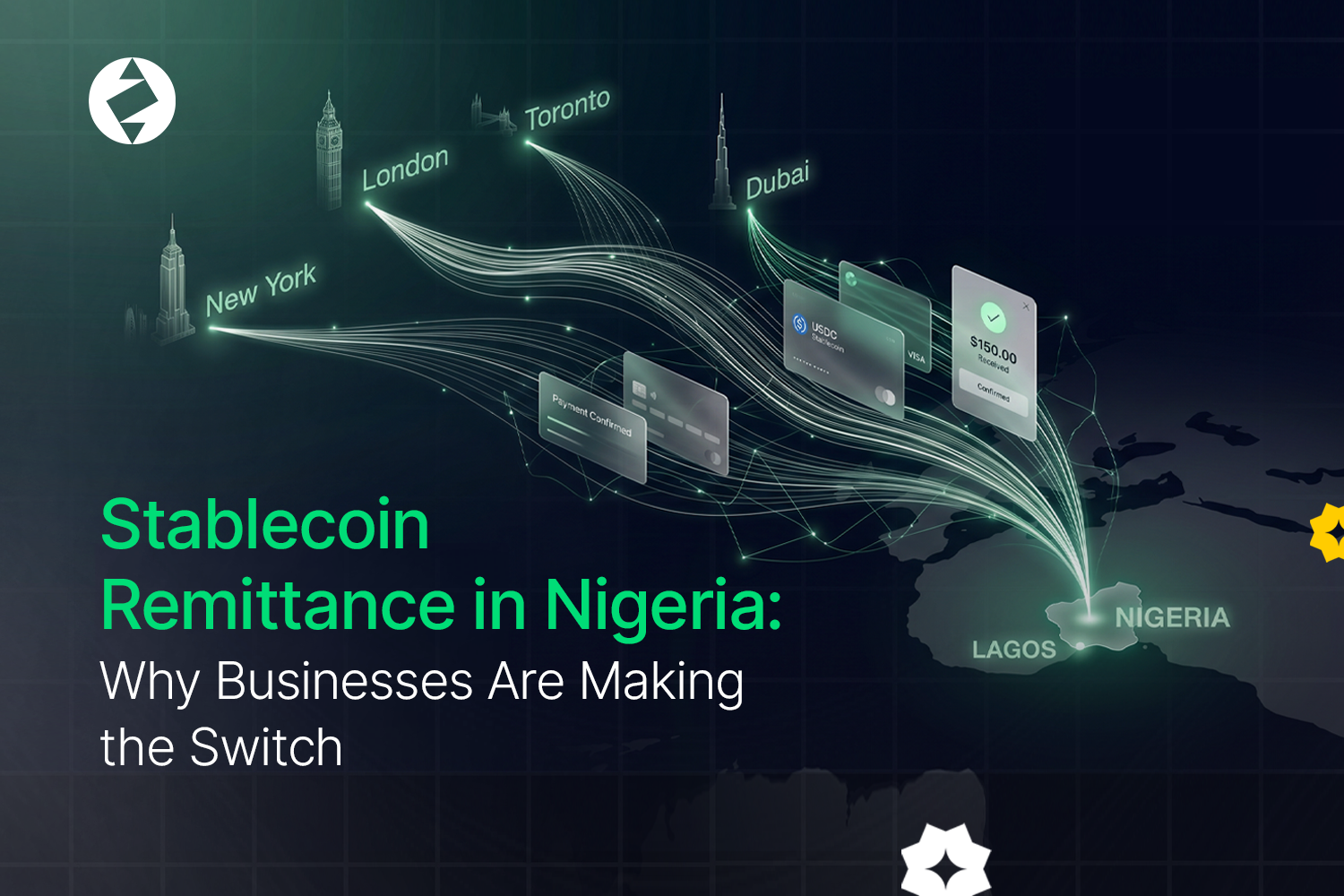
For years, conversations about cryptocurrency in Nigeria focused on trading, investing, and price movements. Today, the conversation is changing.
Businesses are increasingly using stablecoins to solve a much simpler problem: moving money across borders quickly and efficiently. Whether it’s paying overseas suppliers, settling invoices, or sending money to international contractors, stablecoins are becoming part of everyday business operations rather than just investment portfolios.
The numbers show this has gone beyond a passing trend. According to the International Monetary Fund (IMF), Nigeria received about US$59 billion in crypto-asset inflows between July 2023 and June 2024, making it the second-largest crypto market globally on Chainalysis’ 2024 Global Crypto Adoption Index. Even more striking, Nigeria accounts for roughly 60% of all stablecoin inflows into Sub-Saharan Africa since 2019.
For businesses, that’s a signal worth paying attention to.
Why Stablecoins Are Becoming Payment Infrastructure
One of the biggest misconceptions is that businesses are adopting stablecoins because they’re interested in cryptocurrency. That’s not what the data suggests. The IMF says businesses and households are increasingly using dollar-backed stablecoins because they help solve practical payment challenges, including cross-border transfers, overseas supplier payments, and limited access to foreign exchange.
The report also notes that the sharp depreciation of the naira in 2023 and 2024 accelerated demand for dollar-linked digital assets as businesses looked for more predictable ways to settle international transactions.
Stablecoins are helping address some of the challenges caused by correspondent banks, multiple settlement layers, and foreign exchange processing by enabling businesses to move value digitally, often within minutes, while reducing dependence on traditional payment rails.
According to the IMF, they also offer a lower-cost alternative in a region where sending US$200 to Sub-Saharan Africa costs around 9% on average, compared with a global average of about 6%, based on World Bank data.
For businesses paying suppliers abroad or settling international invoices, that difference can have a real impact on cash flow and operational efficiency.
What Is Coming For Businesses?
The momentum is not limited to one country. A 2026 Stablecoin Utility Report, conducted by YouGov in partnership with BVNK, Coinbase, and Artemis, surveyed more than 4,650 people across 15 countries and found that Nigeria and South Africa are leading demand for stablecoins.
Among the findings:
- Nearly 80% of respondents in Nigeria and South Africa already hold stablecoins.
- More than 75% plan to increase their holdings within the next year.
- 95% of Nigerian respondents said they would prefer receiving payments in stablecoins rather than naira.
While much of today’s global stablecoin volume still supports crypto trading, the report points to growing demand for real-world payment use cases, particularly in emerging markets where traditional cross-border payments remain expensive or unreliable.
For business owners, this shift is not here to replace banks or follow a technology trend. It’s about choosing payment infrastructure that supports how modern businesses operate.
As stablecoin adoption continues to grow, businesses will increasingly need platforms that combine digital payment infrastructure with security, compliance, and ease of use.
Can Zabira Business Support Cross-Border Payments?
Zabira Business helps businesses simplify international remittance through secure payment infrastructure built for modern commerce.
Getting started is simple.
- Create Your Account: Sign up and complete your business verification.
- Choose Your Recipient: Enter your recipient’s payment details and review the transaction.
- Send Instantly: Complete your payment, and your recipient receives their funds within minutes.
The story around stablecoins is now about how businesses are choosing to move money in a global economy. As cross-border commerce continues to evolve, companies need payment solutions that are fast, secure, and built for international business.
Zabira Business gives businesses the infrastructure to send international payments with greater speed and confidence. Speak to our team to book a demo and discover how Zabira Business can support your cross-border payment needs.